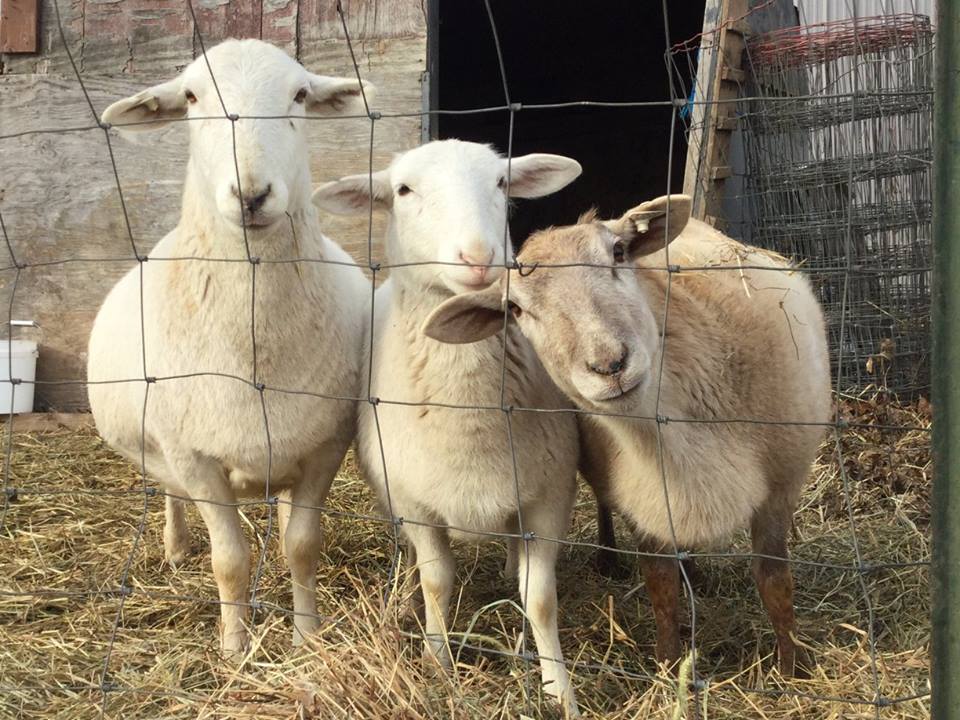
Blog

Grass Farming

The Evening Graze

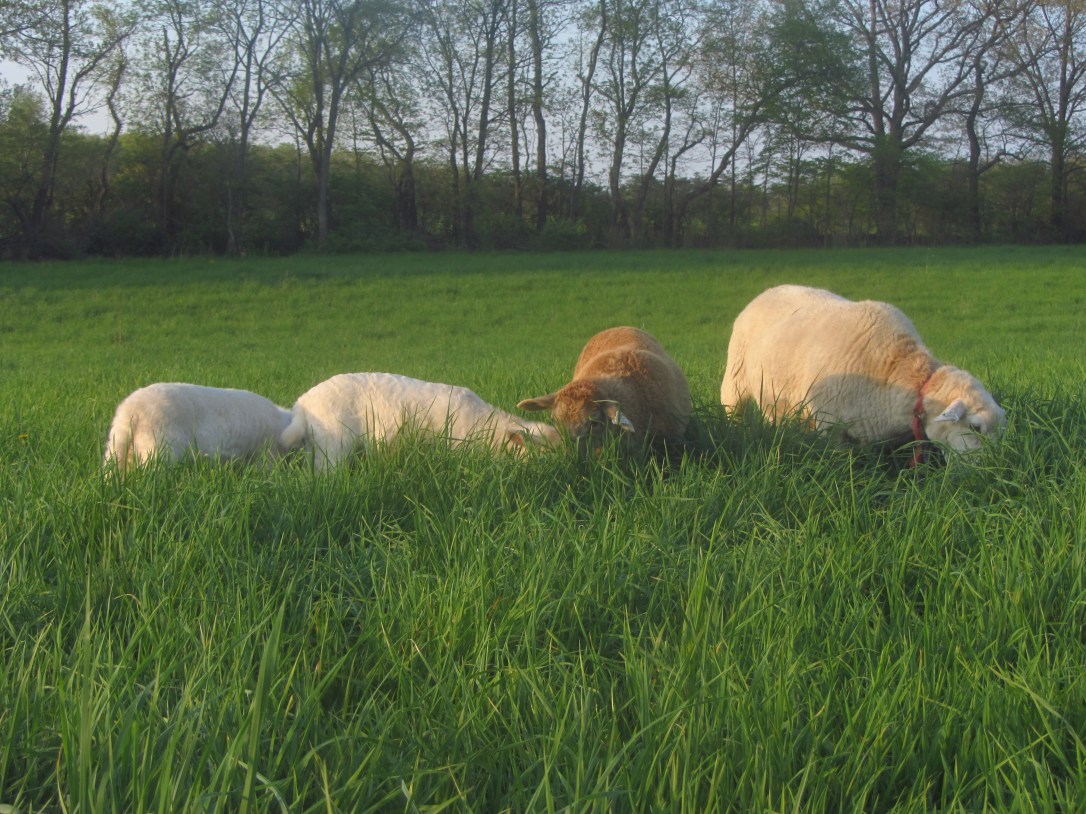
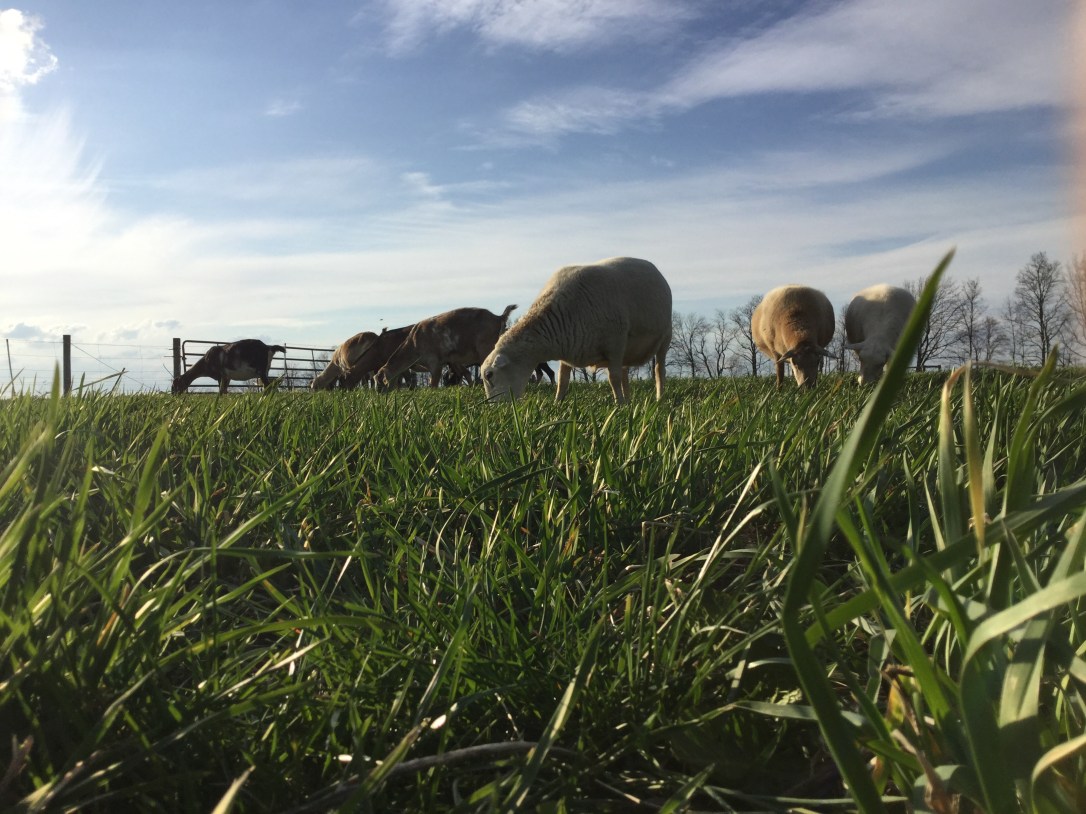
Evening are wonderful.  The heat of the day begins to relent, and the animals come out of their shade shelters, ready to graze.  I love opening up a fresh paddock for the goats and sheep each evening.
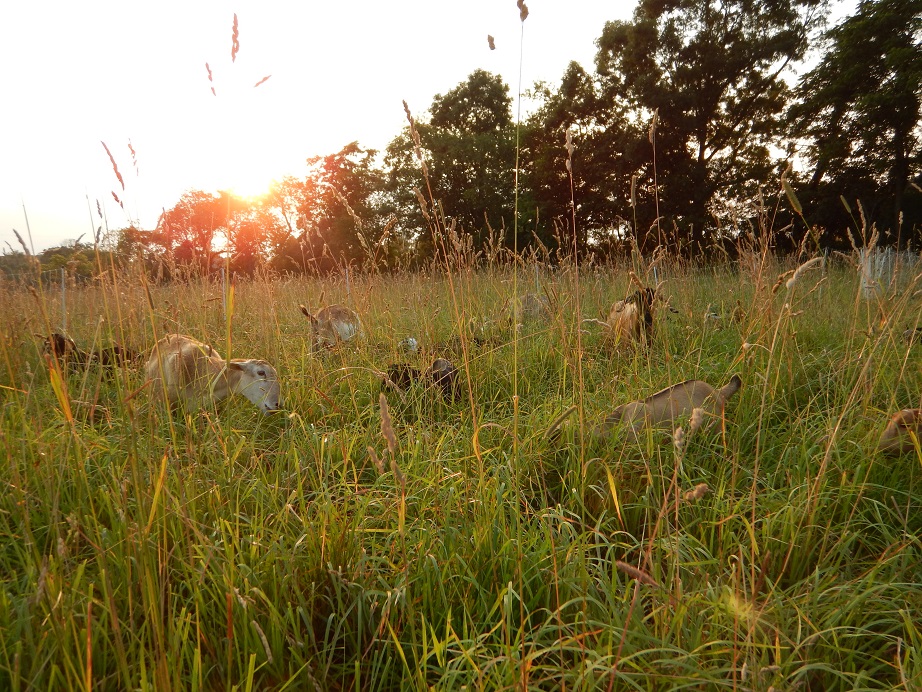
Central PA Grassfed Lamb & GoatGrass is the sweetest and most nutrient dense right at sunset after converting sunlight into sugars all day (and consequently is at its lowest nutrition at dawn after “starving” all night without the sun).  Watching my darlings graze is like therapy; the stress of the day melts away as I watch them enjoy their solar powered meal.
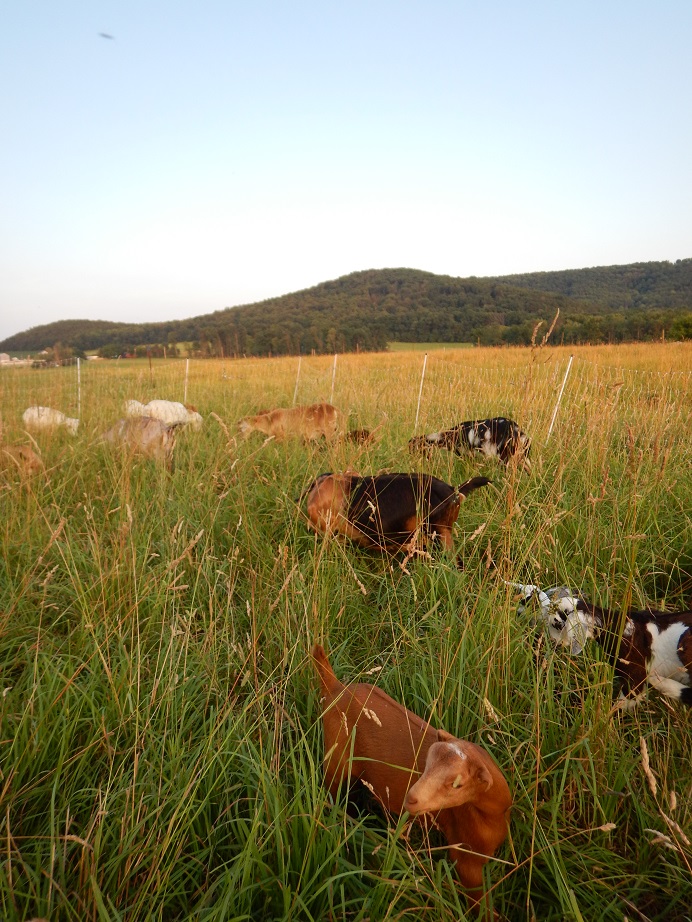
Grass Fed Goats Northumberland County PA


100% Grass Fed Lamb Sunbury PA
2016 Lambs Are Getting Fat

The two youngest of the baby goats spend their evenings playing.  Their energy  releases like a spring, and these two hardly stop long enough for me to get a decent picture.  Some young friends of mine named them Freddie and Nancy.  Cute!

~Sarah
Health & Nutrition

A Vitamin Remedy for Poison Ivy

A Vitamin Remedy for Poison Ivy

Spring is here and the ground is bursting with young green plants of all kinds, including the dreaded poison ivy. I’ve been severely allergic to poison ivy for years, and just the sight of this plant makes my skin crawl!

I’ve become pretty good at spotting and identifying poison ivy and usually do a pretty good job at keeping far away from it.  But you don’t have to come in contact with the actual plant to have a reaction.  My worst rashes have always come indirectly from touching something that has had contact with the poison ivy plant: firewood, dogs, family members’ clothes after they went hiking, the goats, etc.

Ok, I’ve never shown these photos before, but so you don’t think I’m exaggerating, here are two examples of my bouts with poison ivy. As you can see in the first picture, my arms were so swollen, I couldn’t bend them.  In the second picture of my leg, you can see how red and “burnt” looking my rashes were.  Each year, the rashes grew worse; these were no longer normal poison ivy rashes.
Thankfully, I have come across a natural remedy for poison ivy that works so well that I have to share.  If you start this regimen as soon as you realize you are breaking out with a poison ivy rash, you can almost eliminate the swelling and itching.
I first came across this information in Be Your Own “Doctor” by Rachel Weaver, M. H. two years ago when I had my last major poison ivy attack.
Unfortunately, I didn’t get to try it then, because by the time I had found and purchased the needed supplements, my rash had spread to over 60% of my body.  As much as I wanted to try a natural remedy, I decided to go to the doctor and get my usual dose of prednisone.
But now I had the supplements in the cupboard, ready and waiting for the inevitable next time.
Amazingly, it wasn’t till the next spring till I came down with the rash again.  I woke up one morning with my right eye half swollen shut.  My first reaction was to almost start crying. My second, more rational thought was to grab Weaver’s book.

The Vitamins for Poison Ivy

For poison ivy, Weaver suggests taking one capsule of Pantothenic Acid (b5) and 1,000 Mg of vitamin C (I use this brand) every 15 minutes for two hours. Then take the same dose every two hours for the rest of the day.
At the end of my first two hours of taking the supplements, I could already see the swelling was going down.  By the end of the day, the swelling was almost completely gone.  The next morning, my eye lids had swollen up a bit again, so I took a few more doses of the Pantothenic Acid and Vitamin C to bring the swelling back down again.   I. Was. Amazed.  I have always had to go on Prednisone if the rash got on my eye lids.

A few weeks later, I had poison ivy again, this time on my arm.  Again the results from vitamins amazed me. Instead of angry-red, swollen, oozing patches, I only had a reddish-colored, slightly raised areas to mark the rash.  The itching was minimal.   I was ecstatic!

 Why Does This Work?

 My next question was: why do these two vitamins, used together, cause such a decrease in inflammation?  Although Weaver did not offer an explanation in her book, I stumbled on the answer accidentally in Pat Coleby’s wonderful book, Natural Sheep Care.  In the chapter on vitamins, Coleby explains how Pantothenic acid and Vit C are vital for the adrenal cortex to produce cortisone.
In simpler terms, the vitamins B5 and C nourish your adrenals, and healthy adrenals produce, among other things, a natural anti-inflammatory.
  Later in the book, Coleby also states that, in humans, taking artificial cortisone has been known to stop the body’s adrenals from producing natural cortisone for up to two years!
Suddenly, everything clicked.  I had been taking prednisone, a corticosteroid- the same as cortisone, every year since I was a preteen. Sometimes several times a year. Each year, my reaction to poison ivy became more severe.  Why? Because each dose of prednisone was steadily decreasing my body’s ability to produce its own natural anti-inflammatory.  Scary!

Poison Ivy Prevention

 There is one truth I’ve learned about natural health: it’s a journey, not a destination.  Learning about the body’s adrenals glands lead to researching how to build up the adrenals, which lead to researching adrenal fatigue.
I had a lot of symptoms of adrenal fatigue, so I started taking Pantothenic Acid and Vitamin C daily to build up my adrenals.  I could write a whole separate article on adrenal fatigue, but to keep to this article’s theme, I’ll hold back. 🙂  Then why am I mentioning it?  Because several weeks ago, after I had been taking the daily doses of Pantothenic Acid & Vitamin C for a while, I again got poison ivy…but this time, it took me two days to figure out that it was poison ivy because the rash was SO light, wasn’t itchy, and disappeared in only a few days.  When I finally realized it was poison ivy, I was so excited.  My adrenals were working again!

Is 100% Prevention Possible?

I don’t know. Yet. Maybe in a year or two I will be able to answer this.  My theory is, yes, a healthy adrenal cortex could be the answer to complete poison ivy immunity.  I will update this post as I learn more.
If you suffer from poison ivy, I HIGHLY suggest you stock your medicine cabinet with both Pantothenic Acid and Vitamin C.  This poison ivy treatment works much better if you can start taking it as soon as you notice you are breaking out, so don’t wait till after your rash appears to order it. Or better yet, start taking these vitamins daily to boost your adrenals and hopefully reduce your future poison ivy rash.
I hope this information is helpful to you or to someone you care about.  Do you know someone who battles poison ivy rashes?  Please, share this article with them!
 Disclaimer:
The information contained in these topics is not intended nor implied to be a substitute for professional medical advice, it is provided for educational purposes only.You assume full responsibility for how you choose to use this information.
Pigs

Spring Piglets

While I was browsing our website today, I realized that we forgot to post about the new piglets. I mentioned this”problem”to Sarah, and she drafted me to write a piglet post.  Therefore, bear with me as I compose my first blog post. 🙂

Piglets? Yeah! Lots of them…22 to be exact!

image


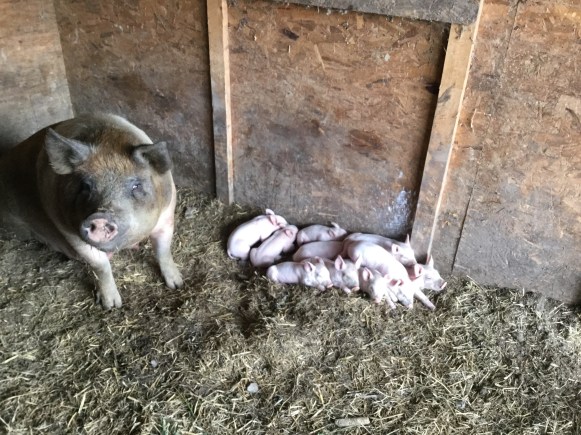
Shanny, short for Shenandoah, had her piglets first.  They’re a week old today.
image
Such a proud mama pig


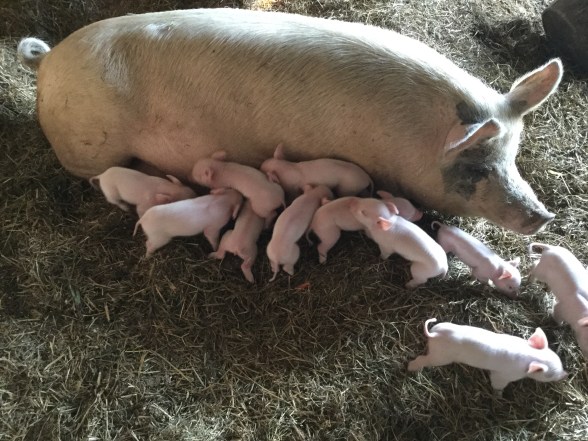
Our other sow, Tanya, had her 11 piglets two days ago.  She’s a very good mother!
image

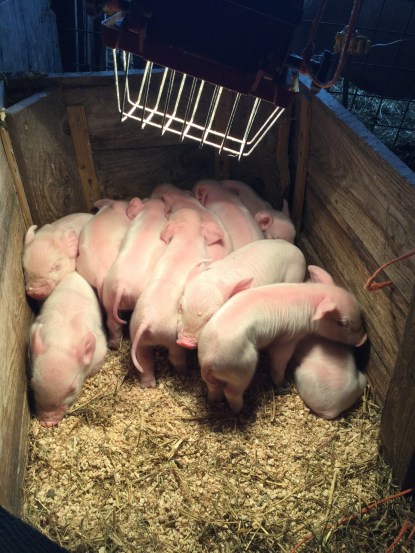
For the first couple of days we like to give them a heat lamp in their “Piglet Box”.  After eating they head to the box to sleep.
Naturally Raised Pigs Sunbury PA

Non-GMO Feeder Pigs For Sale Sunbury PA

We still have five more pregnant pigs on the farm, so the fun is just beginning.

~ Anna

Never Done Homestead Sunbury PA


Uncategorized

The Pastured Broilers Are Growing


Pastured Chicken Sunbury Pa Northumberland County

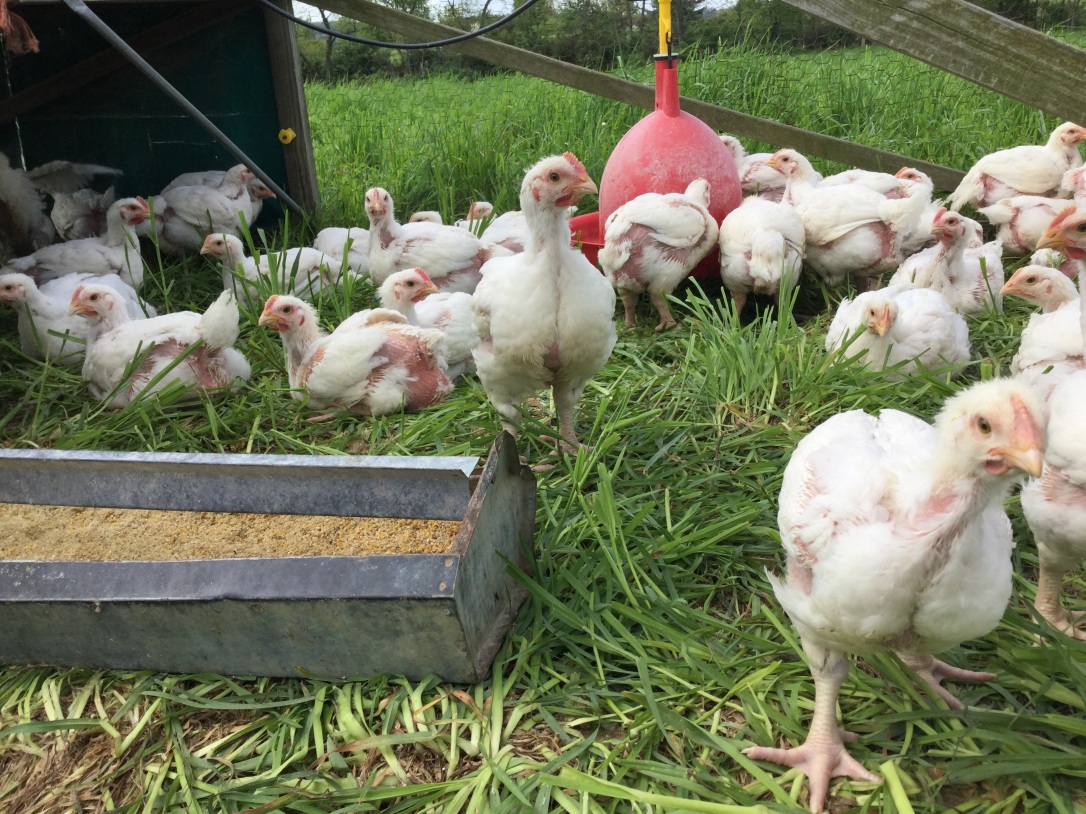
Our meat chickens love being on pasture!  You should see how they gobble down the grass each morning after we move their shelters to a fresh square of pasture.
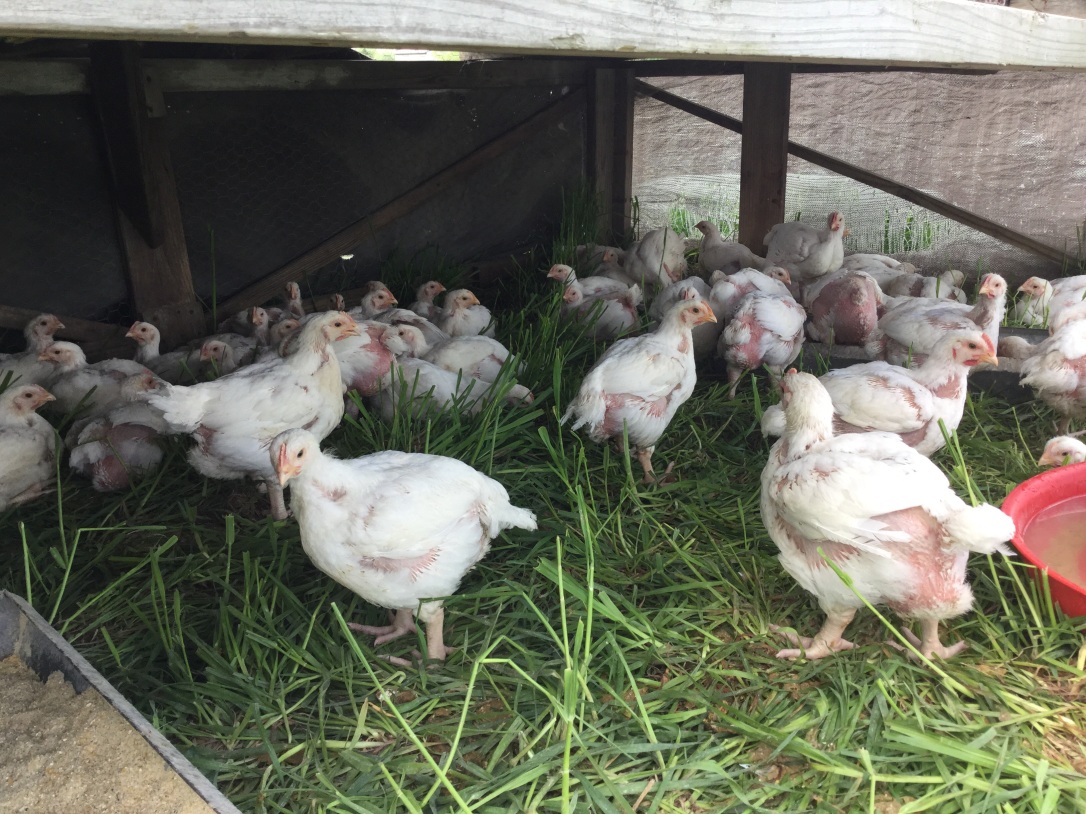
Northumberland county Pa Pastured Chicken

The grass is growing faster than the chickens can keep up with it.  Since meat chickens don’t like tall grass, we are grazing the grass shorter in front of the shelters with the goats and sheep.  The goats and sheep are enjoying the grass, and the chickens are happy: win, win!
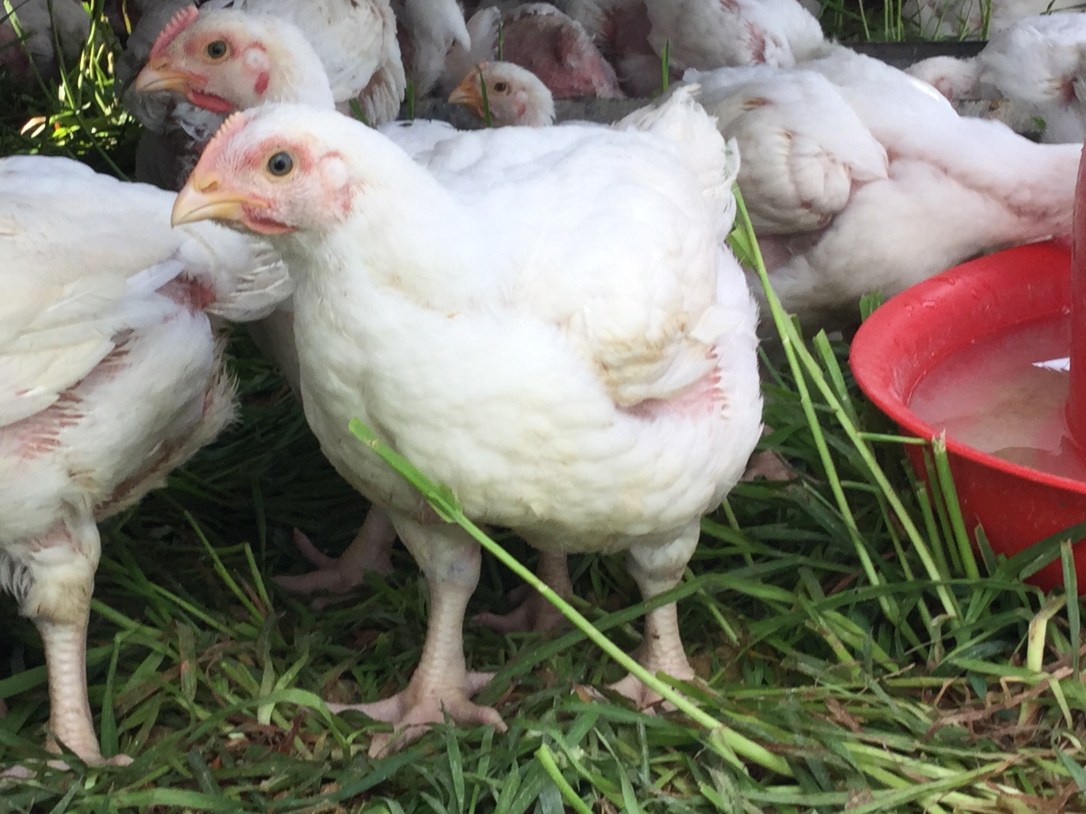
Pastured Chicken For Sale Sunbury PA

We are still accepting orders if you are  interested in trying pastured chicken.  You’ll be amazed at the flavor! Click here for this year’s order form.

Uncategorized

Spring Chicks

The first of the spring chicks are here! There are 153 Cornish Cross chicks and 10 Reich’s Golden Reds layer pullets in the brooder.
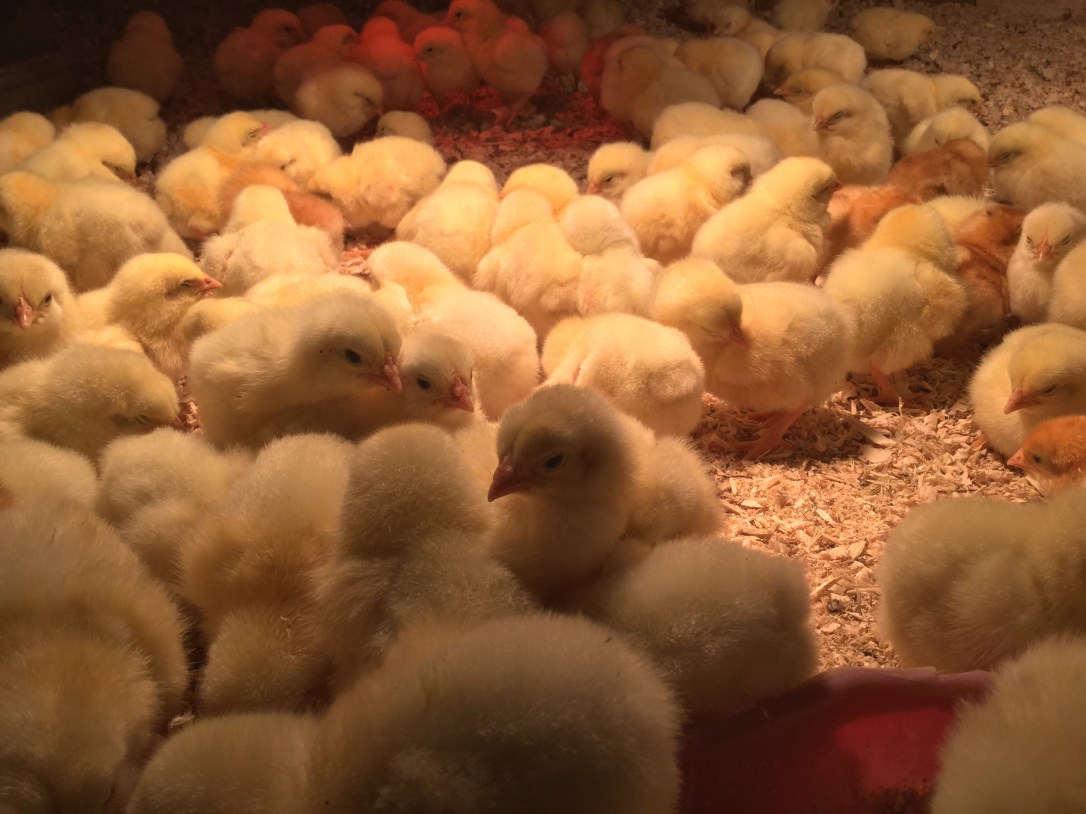
Pastured Poultry Chicks Sunbury Pa
Day One

I called the post office a little after 6 this morning, and confirmed that our chicks were there. The chicks must have been creating a lot of noise because the lady that answered the phone didn’t need to go check, she knew!

After Mom and Anna brought them home, Anna carefully transferred them from their shipping box into the brooder. She told me these chicks are very lively and healthy looking. Yay! (And why aren’t I out there seeing for myself? Half our family, including myself, is down with the flu.😕)
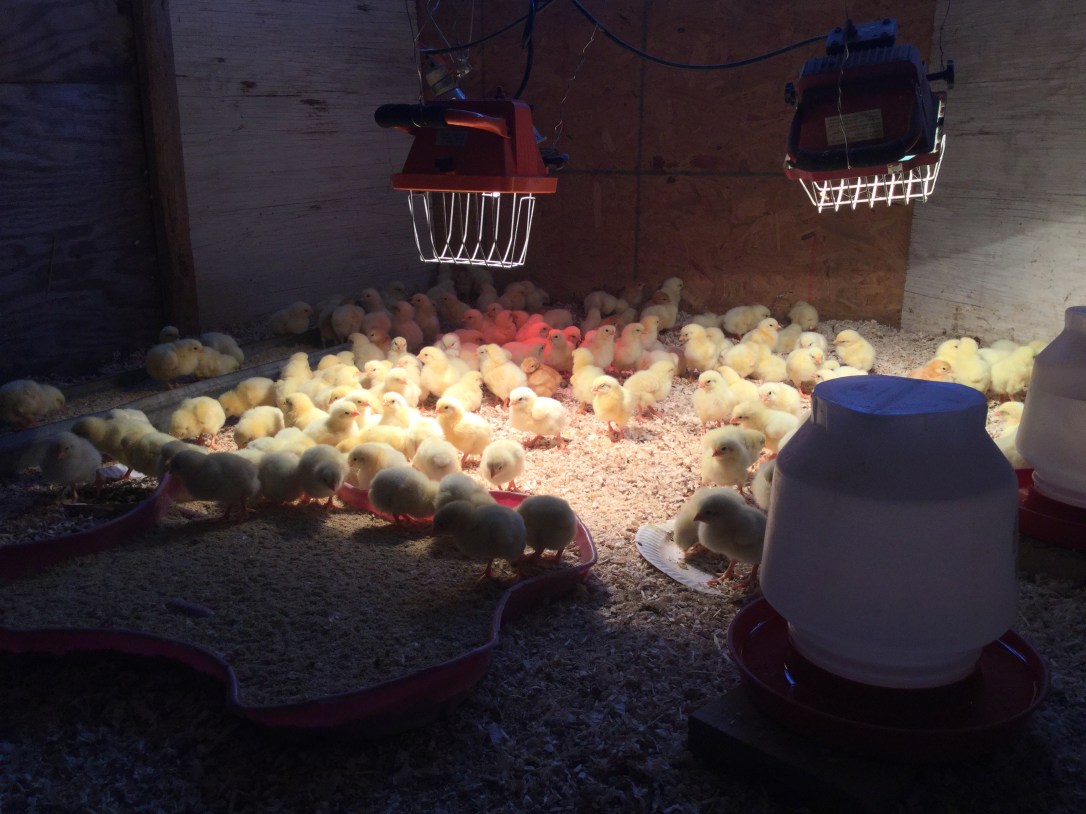
Future Pastured Poultry Sunbury PA
Future Pastured Poultry

At this age, the chicks don’t need much fussing over. In fact, too much fussing over them is stressful, and stress is amazingly detrimental to baby chicks. They just need a warm, dry place with plenty of food, water, and grit.

It’s now officially spring in my mind. There are chicks in the brooder.

~Sarah

Uncategorized

First Year of Sheep

One year ago yesterday, I brought my first sheep home to the farm.
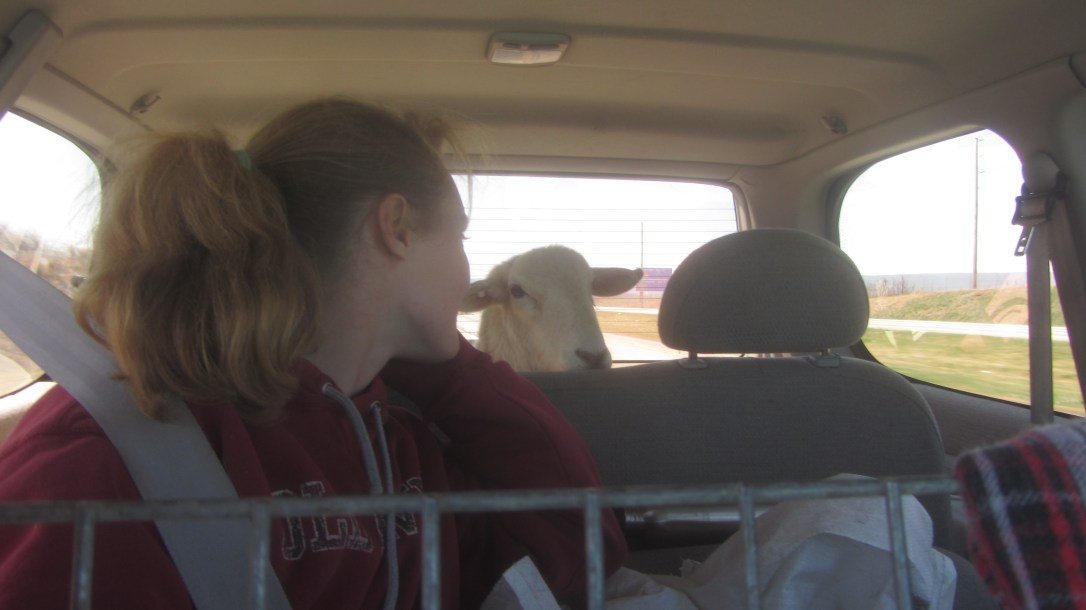
It was the day before Easter, and Anna, Laura, and I took off early that morning in the mini-van-turned-sheep-hauler. Of course, sheep were the topic of discussion on the drive.  I kept coming up with reasons why this was a bad idea, and Anna kept telling me these sheep were the perfect fit.
At the farm, we entered a small shed, and there they were: a lovely white yearling Katahdin ewe and her three day old twins and an eight week old chocolate colored ewe lamb.  It didn’t take me long to say I’d take them.
IMG_9672
Heading Home


The ride home was pretty uneventful; we only took one wrong exit. If you get stuck in holiday traffic (because you took the wrong exit) with two sheep looking out your van’s back windows, you are going to create a bit of a stir.  Bored, sleepy looking children suddenly come alive, bouncing, pointing, and shouting.  Teenagers whip out cell phones and take pictures, and some people just look at you like you’ve lost your mind.
My little flock settled right in to their new home.  I had been worried that the stress of traveling would be too much for the newborn lambs, but they took it in stride.
IMG_9709
Welcome Home Sheep!
It took me over a week to pick out the girls’ names.  I knew the yearling ewe was going to be the matriarch of my future flock, and I wanted a name that would fit that position. I finally decided on Olga.  Good Old Olga.  The chocolate ewe lamb I named Sabine, and Olga’s ewe lamb I called Estella.
IMG_0168
Enjoying the Spring Grass
Now, one year later, I admit Anna was right: these sheep are the perfect fit. They are wonderful!
sheep
Olga, Estella, & Sabine


Olga is my steady sage of a ewe.  Most of the time she is dignified and queen like.  Occasionally she forgets herself and leads the younger ewes on a wild charge across the pastures, her tail flying wildly behind her.
Olga will walk up to the fence to see me, allow me to pet her a few times, but then steps back; royalty must keep its distance from the commoners.
Sabine is more easy going than Olga, but still has that lovely sheep dignity about her.
Sabine has been wary of me from the start, but over this winter, I’ve won her approval.  It never ceases to thrill me when I’m able to win an animal’s trust.
And then there is Estella.  Estella grew up here on the farm hanging out and goofing off with the baby goats.  Now, she acts like a goat.  She is demanding like a goat. She is quirky like a goat.  She possesses none of her mother’s dignity, whatsoever!  And I love it!  She’s the perfect sprinkle of humor in the act!
Grass fed sheep Sunbury PA
Grazing with the Goats
All three of them are due to lamb starting in mid-May.  I know Olga is a good mother, and I really think Sabine will be, also.  But Estella…oh help!
I have one year of being a shepherdess under my belt.  I’m highly anticipating year two.
~Sarah
Uncategorized

There Are Animals In The Garden

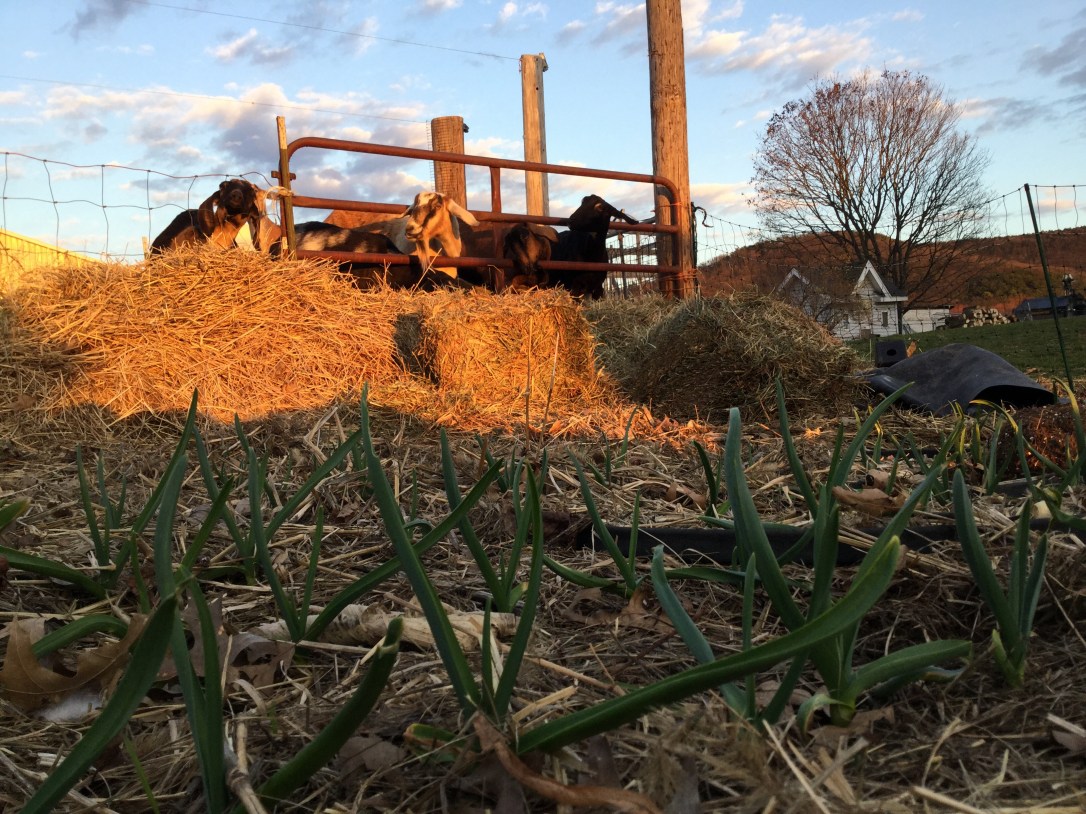
There are animals in the garden, and for once, they are actually supposed to be there.
 

image

Photo by Laura: Goats & Garlic in the Garden

I’m experimenting with housing animals in the garden while it is in its winter dormancy. I’d love to say the idea came while trying to find a way to increase biodiversity, mimic nature, and increase fertility in our garden soil.  The truth is, I desperately needed a place to put the goats over the winter, and the tomato patch was the only place that wasn’t flooding. So to make lemonade out of a lemon, I’m calling it an experiment station.
image


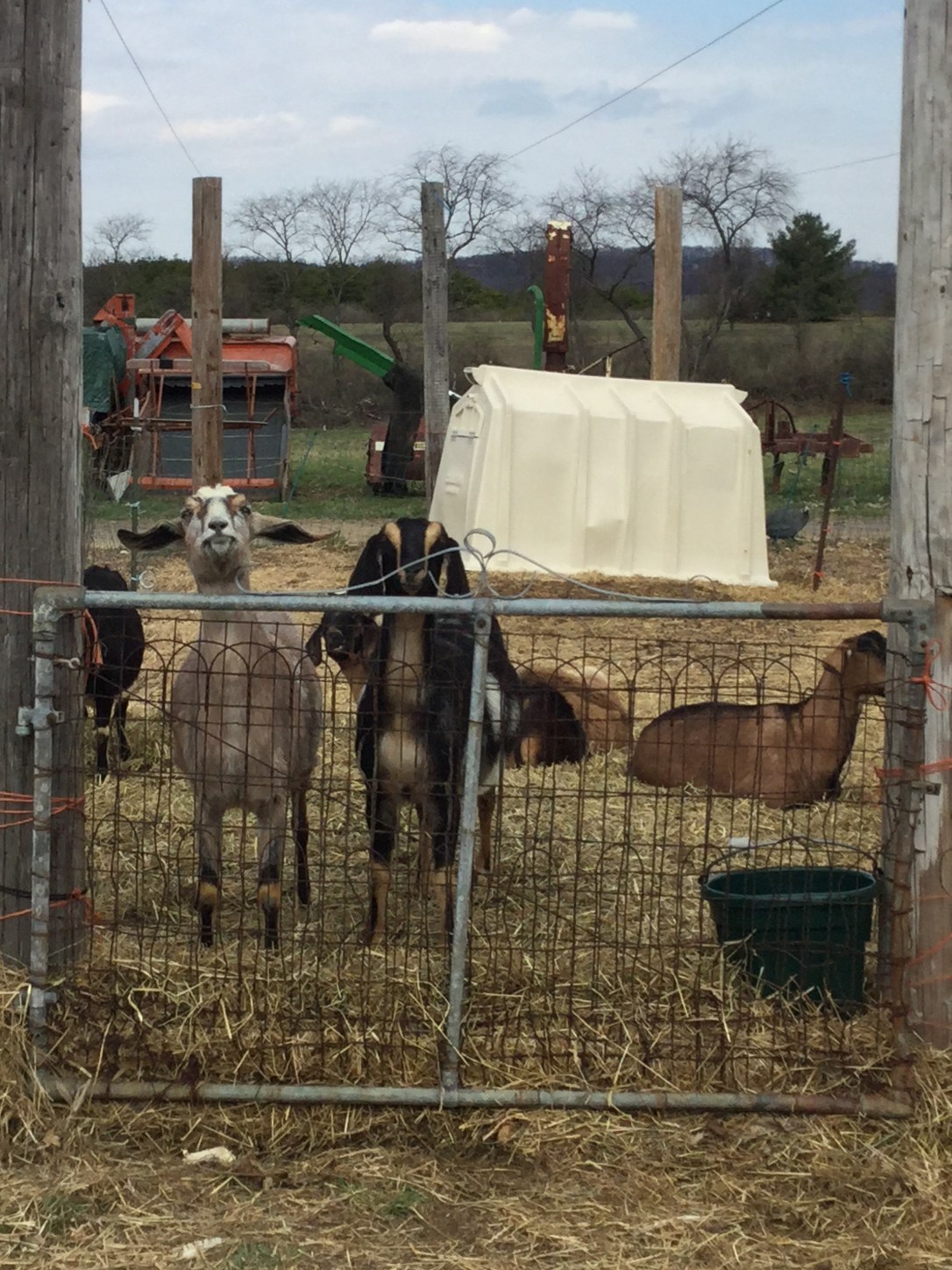
In the fall, the tomato patch had about 6+ inches of wood chips on it so the goats didn’t have direct contact with the soil. Deeply bedded calf hutches protected them from elements.

In the typical goat fashion, the does managed to spread a nice layer of waste hay mulch over the whole tomato patch. I’m hoping with the wood chips, hay, manure and urine, we will have a nice fertile layer into which we can plant our tomatoes.

image

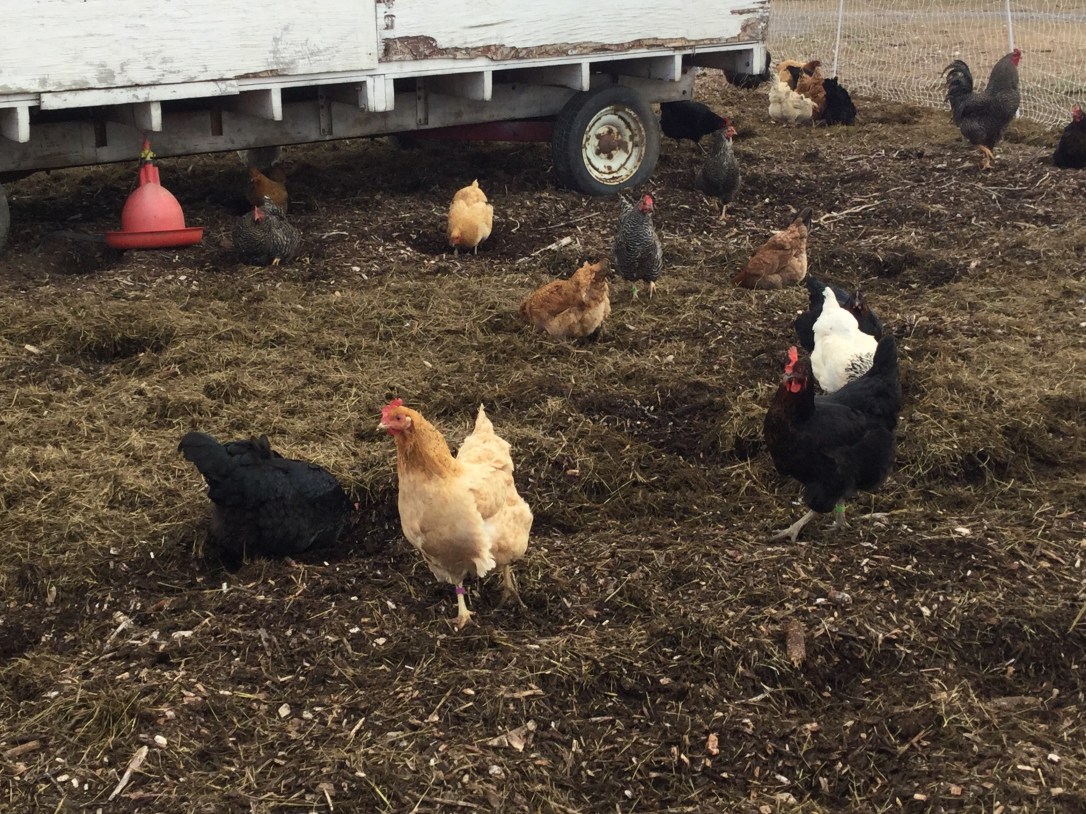
The “goats in the garden” experiment led me to try a second experiment: chickens in the garden.
image

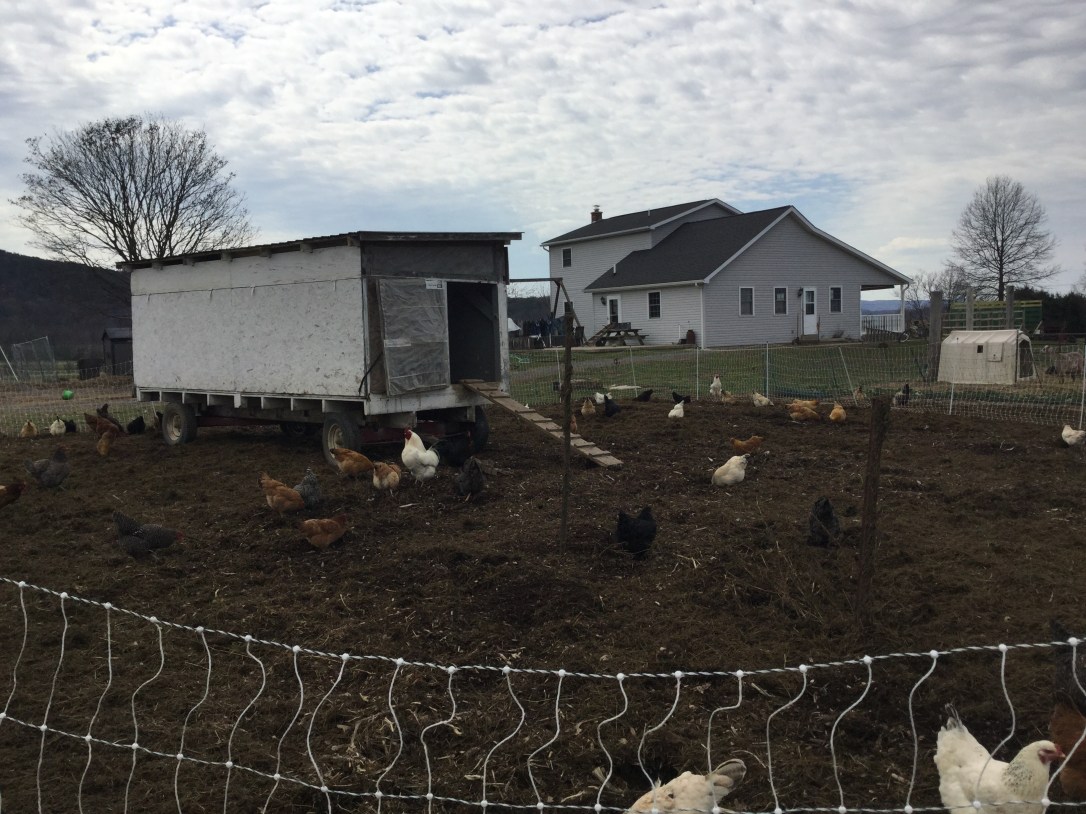
Yesterday, Anna and I threw some cow manure on the garden with the manure spreader. This morning the whole gang helped us move our mobile chicken coop on to the garden. We surrounded the area we wanted “chicken tilled” with electric poultry netting. The hens are loving scratching through everything. Happy hens = yummy eggs!  They don’t realize they are actually working, tilling the cow manure into the top layer of the soil.
image

I’m only planning on leaving the chickens here for a week or less. By then, the chickens will be ready to move on to their next job.

~Sarah

Uncategorized

February is for Butchering

We are currently being held in the icy grip of February, a memorably cold February.  Sunday night’s temp is going to be in the negatives!  But I’m not too unhappy about it.  In fact, I’m thrilled.  Before you think I’ve got a frostbitten brain, I should explain that there is one awfully large beef hanging in dad’s meat cooler AKA garage. Large is an understatement.  HUGE!   While we were skinning it out on Monday, we once again considered breeding smaller cows in the future. 😜 Cold weather like this is wonderful for chilling meat.  Actually, it’s a bit too cold, but we have a heater on a thermostat to keep the garage just above freezing.

02-2016 beef

So this weekend, we will be cutting roasts and grinding burger. A lot of it.  We will drink way too much hot coffee.  We will probably get lost as we try to find the different cuts that are in our butchering book. (But hopefully we are better at cutting roasts this year. Last year after searching in vain for the chuck roasts, we cut some odd roasts from the rump that we labeled Rump Chucks. Bet you never had one of those before!)

It’s going to be fun. 🙂